No Drips, No Problem? The Loft Visit That Changed One Customer's Mind
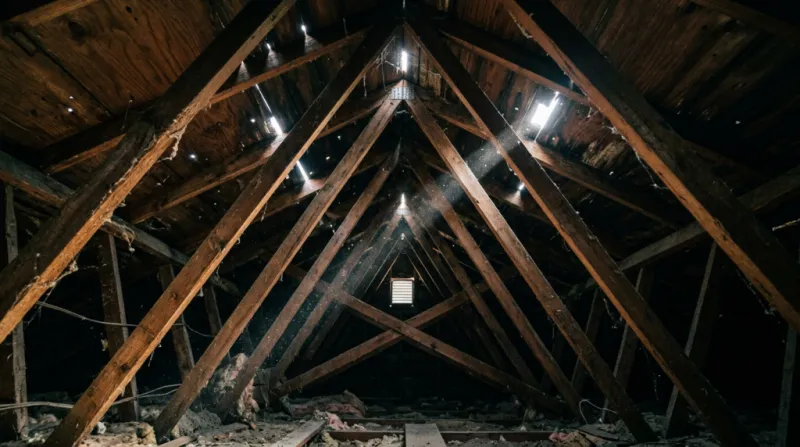
Photo: torchlight loft inspection roof timbers dark attic UK house, via fullhouseroofing.com
Every so often, a job comes along that we remember. Not because it was difficult or dramatic, but because of the conversation that happened before we did any work at all.
A few months back, we quoted a lady in a 1960s semi for a full gutter clean. She rang back the same afternoon, perfectly polite, and told us we were wasting her money. "There's nothing wrong with my gutters," she said. "Not a drip. I'd have seen it by now."
She had a point — from where she was standing. From where we were standing, or rather, from where we were about to be standing in her loft, things looked rather different.
The Argument for Doing Nothing (And Why It's Understandable)
Let's be fair to her. From the ground, her guttering looked tidy. No green sludge hanging over the edge, no tell-tale stains down the render, no waterfall effect when it rained. If you judge your gutters by whether water's coming through the ceiling, hers were doing a sterling job.
And honestly, we meet plenty of homeowners who've been sold work they didn't need. We've written before about talking customers out of spending money. So when someone pushes back on a quote, we don't take it personally. Scepticism is healthy, especially in the trades.
But here's the thing: by the time a gutter announces itself with a drip, it's usually been quietly failing for months. Sometimes years.
The Two-Hour Standoff
We didn't want to just take her money, and we didn't want to walk away either. So we suggested something unusual: let us go up the ladder and into the loft, have a look, and if we found nothing, we'd tell her so and be on our way. No charge, no hard feelings.
She agreed, arms crossed, and watched us the whole time like we were about to make off with her wheelie bins.
Up top, the story unfolded quickly. The gutters weren't overflowing — they were leaking backwards. A run of joints along the rear of the house had worked loose, and every time it rained, water was seeping into the fascia and running down the inside of the wall. From outside: nothing. From the loft: a tide mark.
We fetched the torch, invited her up the ladder (she declined, sensibly), and took photos instead. There, on the rafters above her back bedroom: a dark, damp stripe running the length of the wall plate, and a patch of timber that had clearly been wet and drying out in cycles for a good while.
She went quiet for a moment. Then she said the words we hear more than you'd think: "I didn't know it could do that."
Why Gutters Fail Quietly First
Most people imagine gutter failure as a dramatic event — the burst pipe, the indoor waterfall. In reality, it's usually much duller than that:
- Backflow, not overflow. When debris blocks a gutter or a downpipe, water doesn't always spill over the front. It often backs up at the joints and seeps behind the fascia, where you'll never see it.
- Slow saturation. Damp takes weeks to show on a ceiling. By the time there's a stain you can spot, the timber behind it has been soaking and drying repeatedly.
- Gravity works against you. Water that gets behind the fascia runs down the cavity or onto the wall plate — the structural timber your roof timbers sit on. That's not a £90 clean anymore; that's a carpenter.
The gutters on that house weren't broken. They were full of moss and a couple of tennis-ball-sized clumps of leaves, and the joints had been strained by the weight. A clean, a reseat, and two new union brackets. Half a morning's work.
What We'd Suggest You Do
You don't need to take our word for it — but do take the loft's word for it. Next time you're up there grabbing the Christmas decorations, shine a torch along the top of the external walls and the wall plates. You're looking for:
- Damp patches or dark staining on timber near the eaves
- A musty smell that lingers even in dry weather
- Flaking paint or soft spots on the fascia visible from outside
- Water marks on the top of the insulation near the edges
If you spot any of those, your gutters may already be talking to you — just not loudly enough to hear from the sofa.
The Point of All This
We finished the job that day, and she's since booked us for an annual clean. But the reason we're writing about it isn't to pat ourselves on the back. It's this: gutters rarely fail loudly first. They fail quietly, in the dark, above the ceiling, where nobody's looking.
A visible drip is the end of the story, not the beginning. If you'd rather hear the story earlier — when it's still a cheap one — get someone up a ladder once a year and have a proper look. We're happy to be that someone, torch included.